The Allure Of Tiki Culture And The Spirit Of Rum
In the World of Rum, we often hear the word ‘Tiki’, but what exactly is Tiki & Tiki Culture? In this article, we’ll trace the origins, rise, and revival of tiki culture and explore its deep bond with the spirit of rum.
When you think of tiki culture, images of vibrant tropical settings, elaborate cocktails adorned with colourful umbrellas, and carved wooden idols come to mind. This enchanting cultural phenomenon has a deep-rooted connection to the world of rum, making it a fascinating subject that has captivated the imagination of countless enthusiasts around the globe.
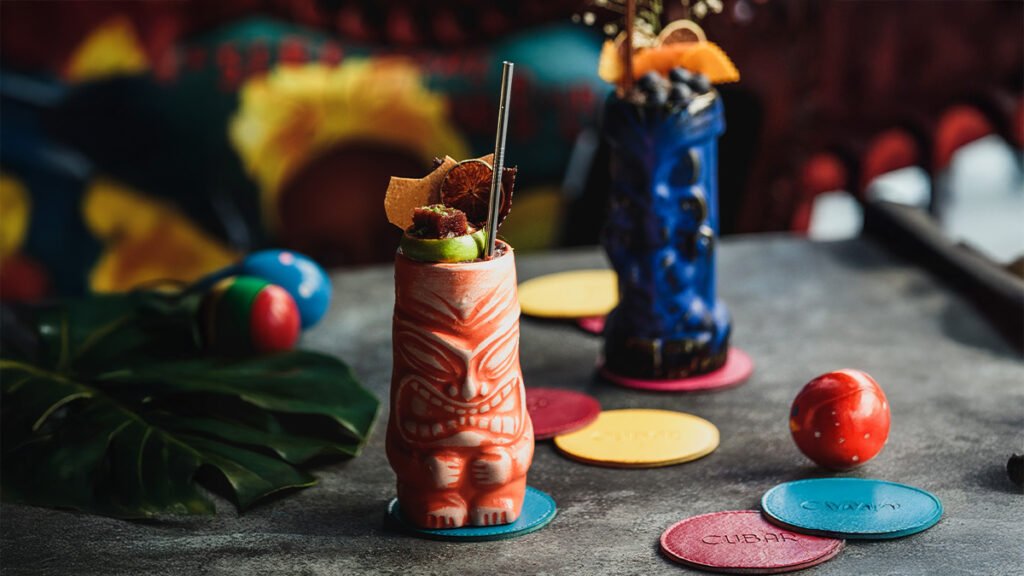
You’ll recognise the palm trees and pineapples in the décor, and the big, bold character of the tiki mugs that line a bar. Some say that Tiki is a philosophy, and it’s all about relaxing and kicking back like you’re on an island with the sound of the waves. I would say there is a truth to this, certainly one we experienced in lockdown when sales of rum went through the roof, and we were all playing holiday in our back garden or local park. Any Tiki bar I’ve seen, from someone’s home bar to a multimillion-pound business, is an escape from the hustle and bustle of everyday life.
At the heart of tiki culture lies a mesmerising aesthetic that transports guests to faraway tropical islands. The distinctive decor elements of tiki bars, such as bamboo, thatch, rattan, and tiki statues, contribute to the enchanting ambience. Patrons are surrounded by an atmosphere that encourages relaxation and indulgence in the spirit of adventure.

The Origins of Tiki Culture
But where did the culture come from? The original Polynesian culture has inspired bars around the world to decorate with tropical waterfalls and hibiscus garlands and serve bright and bold drinks built around rum and fruit juice. The history dates back to Polynesia, in the South Pacific. The word Tiki is the name of the first man created in Māori mythology. You might recognise the Tiki from any time you’ve seen a Tiki mug. Carved wooden statues representing Gods inspire the ceramic cups found in Tiki Bars. The earliest ‘Tiki Mugs’ that we know weren’t really called as such, and didn’t feature Tiki either, but skulls or straight ceramic cups featuring hula girls. And despite what you’d think, Tiki mugs didn’t feature in one of the first Tiki bars either. Don the Beachcomber in Hollywood, California, was opened in the 1930s by Tiki legend Donn Beach. An old menu of his reveals most of his drinks were served in glassware, and a later menu again shows glassware or hollowed-out fruit, like pineapples or coconuts. Inspired by his travels, Donn began recreating the flavours he experienced with rum and fruit like pineapple and guava. The theme was taken up by friend and rival, Victor Jules Bergeron, in his chain, Trader Vic’s. These bars were inspired by Polynesian culture but comprised everything from lobster pots to anchors and all sorts of non-Polynesian things now intrinsically linked to it through Tiki.
The next important development was the invention of the Mai Tai. This delightful drink is now arguably renowned as king of the Tiki cocktails. As I often say, it is the case with many drinks that there is more than one story to its invention. The most common story is that the Mai Tai was invented in the 1940 by Donn Beach’s friend and rival, Victor Jules Bergeron, or ‘Trader Vic’ as he’s now known after his bar. As the story goes, Vic tested his recipe (pineapple juice, orange curaçao liqueur, orgeat liqueur, light rum and dark rum) on a couple of friends from Tahiti, to which one exclaimed, “Mai tai-roa ae”, which translates to “Out of this world – The best”. This is supposedly where the drink gets its name. Donn Beach did argue that he had invented the drink first, with his drink the QB Cooler, but the name of the Mai Tai endured.
The Tiki mugs that feature Tiki himself came around a little later during the 1940s. These were created by a New Zealand firm called Crown Lynn that took its inspiration from Māori culture and created a range of decorative items including salt and pepper shakers and ashtrays. The mug dates to 1949 and is one of the earliest in the world. And it seems Tiki mugs are first mentioned in the Trader Vic’s 1947 Bartenders Guide. Although most drinks are pictured with glassware, there are four depictions of ceramic vessels, including a ceramic skull mug for hot buttered rum, a scorpion bowl, kava bowl, and tall fog cutter mug, “all depicting island scenes with native women.”
The popularity of Tiki bars surged during the 1950’s when air travel from the US to Hawaii became more common and more and more people were exposed to the culture behind the theme.
As the fascination with tiki culture peaked in the mid-20th century, these vibrant establishments dotted the American landscape. However, as the cultural landscape shifted in the 1970s and 1980s, tiki culture experienced a decline. Many tiki bars closed, and the once-thriving scene faded into obscurity. In recent years, a resurgence of interest in tiki culture has taken place, captivating a new generation of enthusiasts. Tiki-themed events, cocktail competitions, and the preservation of classic tiki bars have breathed new life into this alluring subculture.
And as the world speeds up, it seems we need these bars more and more. Tiki Bars are still popular on the West Coast of the US, and they have been spreading and can now be found all around the world. Trader Vics has even found it’s way to the rich streets of Park Lane in London.


The Spirit of Rum in Tiki Culture
Rum, with its rich history intertwined with seafaring and exploration, became the natural companion to tiki culture. The association between rum and tiki was solidified through the creation of exotic rum-based cocktails. From the iconic Mai Tai to the mysterious Zombie, these concoctions highlighted the diversity of rum and its ability to blend harmoniously with tropical flavours.
Classic Tiki Cocktails
The Zombie, a potent mix of various rums, fruit juices, and spices, quickly gained popularity for its captivating flavours. The Piña Colada, with its creamy coconut and pineapple goodness, remains a symbol of indulgence in tiki culture.
Hibiscus, or Sorrel as it’s also called, is also a part of Tiki culture and has become a beautiful garnish for Tiki cocktails, along with an ingredient for cocktail making. The deep red colour can create stunning drinks, and there is a note of bitter tartness along with a touch of sweetness. You can find Hibiscus essence online, and I would recommend using bitters, an easy way to dash a couple of drops in to get all those beautiful qualities nice and easy.
Tiki culture and rum have forged a bond that transcends time and geography, captivating the hearts of those who seek a taste of tropical paradise. From its pre-war origins to its resurgence in the modern era, tiki culture’s enduring appeal continues to spark fascination and celebration.
While mindful of issues surrounding cultural appropriation, the enchantment of tiki culture remains a testament to the human desire for escapism and adventure. As you sip on a delightful rum-based tiki cocktail, take a moment to appreciate the rich history and artistry behind this captivating cultural phenomenon. Cheers to embracing the exotic allure of tiki culture and the spirit of rum!
Buy Tiki Mugs Online


This post contains affiliate links. We may earn a commission if you buy, at no extra cost to you.