Sugarcane, Sustainability And CO2
In the drinks industry, sustainability is not a new topic and certainly not a topic that’s going away. And rightly so. As time goes on, we’re seeing it become a more prominent concern for both producers and drinkers, which drives the developmental process.
With this in mind, let’s shine a spotlight on sustainability in rum and look at how this important side of the industry is progressing.
Let’s start with sugarcane. Increasing sustainable processes in sugarcane production has a huge impact. It benefits not only rum but the sugar industry as a whole.


With sugarcane juice and molasses being the raw materials of rum, sugarcane production is an essential industry and has been the backbone of rum production since it began. Sugarcane is grown in warm climates such as South America, Africa, Australia and Southern Asia, as well as on smaller tropical islands with a similar climate. It’s even grown in Spain and North America. Production takes its toll on the environment, and that comes at an ecological cost. According to data insight provider Knoema, ‘Brazil is the top country by sugarcane production in the world. As of 2020, sugarcane production in Brazil was 757 million tonnes which accounts for 40.59% of the world’s sugarcane production. The top 5 countries (others are India, China, Pakistan, and Thailand) account for 74.65% of it. The world’s total sugarcane production was estimated at 1,865 million tonnes in 2020.’
Now, that’s a lot of sugar! In fact, sugarcane is the world’s largest crop by production quantity, but how exactly does this affect the environment? Firstly, sugarcane is a water-intensive crop that remains in the soil all year long, so there is no break. In farming, crop rotation is widely acknowledged to allow the land to be replenished with certain nutrients. As one of the world’s thirstiest crops, sugarcane has a significant impact on environmentally sensitive regions, like the Mekong Delta and the Atlantic Forest. And historic planting of sugarcane around the world has led to impacts on biodiversity, which needs a variety of plant life to support a wider range of wildlife. Sugarcane production also pollutes freshwater ecosystems with silt and fertilisers washed from farms, as well as plant matter and chemical sludge from mills. Around the Great Barrier Reef and the Mesoamerican Reef, those contaminants are flowing out to sea and damaging precious coral ecosystems.


Canegrowers, an organisation based in Queensland since 1925, provides a voice for local growing families and does a lot of work on reducing damage to the Great Barrier Reef.
A global issue that sugarcane farming contributes to is deforestation, something we also struggle with due to the industrial farming of animals and palm oil, amongst other things. With sugarcane, it threatens some of the world’s most threatened ecosystems, including Brazil’s Atlantic Forest, which has been reduced to 7% of its original size. And demand will only worsen this issue, with growers needing to cultivate almost 50% more land by 2050 to meet projected global sugarcane demand. Our world is precious, and there has been far more focus on providing resources than on conserving the areas that can provide them.
However, we are starting to take more notice. New organisations are popping up, and longstanding organisations like Canetraders are getting more support to make that difference. The WWF is a helpful resource on the subject and, as they state, “WWF works with Bonsucro and a wide range of stakeholders, farmers, processors, food and beverage producers, traders, investors, industry specialists and civil society to develop, strengthen and promote standards for sustainable sugarcane cultivation and processing.”
Bonsucro is a non-profit organisation that launched in 2005 and promotes sustainable sugarcane production, processing and trade globally. They also offer certification that the sugarcane used by a distillery is produced, sourced and traded responsibly.
The progress they’ve made so far is promising. 1.2 million hectares of sugarcane land are certified, and Bonsucro-certified operations in Brazil exceed yields by an average of 11.5 additional tonnes of sugarcane per hectare compared with non-certified peers. Certified mills have been recorded as reducing nitrogen fertilisers by 28% over 9 years, reducing water use by 50% over 5 years and reducing CO2 emissions by 5.5% in just one year. As well as the environmental impact, there are other positives, including a reduction in worker exploitation. All in all, it’s very impressive. If you want to find out more about Bonsucro, just head to their website. There is a wealth of information there, including their outcome reports, which are loaded with simply presented facts, figures and case studies.
Here are some of the methods that farmers can use to improve sustainability:
- Varietal testing – It’s now more commonplace to test different varieties of sugarcane for cane yield, juice quality and reaction to pests and diseases, meaning more efficient crops that provide more, for less.
- BMP (Best Management Practices) – These are a range of methods being taught to farmers to help conserve soil, manage crop residues and protect water and air quality on farms.
- Intercropping – This is often used and means growing more than one crop in close proximity. There are a number of benefits to this. If one crop doesn’t fully utilise the resources, planting another that uses what the first doesn’t means a better yield for the area. Mutualism can occur, which means the crops benefit each other by being close, and it can also help with pest management. Having multiple crops in an area also helps biodiversity.
- Fertigation – This is a process that combines fertilisation with irrigation. It ensures that essential nutrients are supplied at the area of most intensive root activity, according to the specific requirements of the crop and type of soil. This results in higher cane yields and sugar recovery.
Another interesting point is how some producers are choosing to make rum from sugarcane juice rather than molasses, and this decision is being driven by sustainability.


Camikara Rum, from India, is made from sugarcane juice, and the decision to do this has an environmental aspect. There is some really interesting research out there, conducted by Priyanka Singh from the Uttar Pradesh Council of Sugarcane Research. It states that carbon released by sugarcane in the field and during processing accounts for 20.6 million tonnes of CO2. However, the crop itself absorbs 228.89 million tonnes from the atmosphere during its life cycle. So, as is so common in sustainability, to be truly effective, we have to look at the big picture.
Rums made from sugarcane juice deliver a much clearer and more precise terroir than rums made from molasses, and this creates opportunities for rum fans, who are often searching for that experience of place as well as what tastes good. The popularity of sugarcane juice-based spirits is growing amongst rum drinkers here in the UK and in areas of the globe where it wasn’t so prominent before. Whereas once there were only locally specific drinks like Agricole and cachaça, there are now lots of different rums made from sugarcane juice rather than molasses.
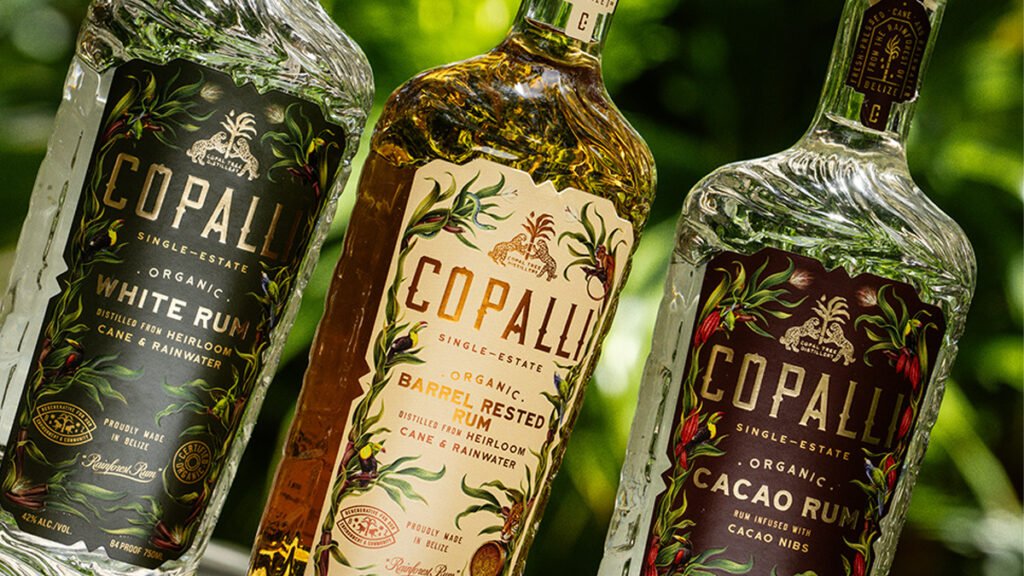
Copalli Rum from Belize is another interesting case, as the rum came about as a way to preserve the rainforest of Belize. The founder, Todd Robinson, was looking for a business and, along with conservationists, researched the kinds of industries that could be sustainably built and operated in the local area, which would also create employment for the local community. The answer was rum.
Rum production had existed on the site as early as 1800, so there were existing varieties of sugarcane. Copalli’s processes have sustainability at heart. The farm is organic, and the sugarcane fields are not burnt. The refrigeration system is powered by steam, and the boiler is fuelled by 100% biomass, using dried cane left over from juicing, plus husks and leaves.

Rum producers in the UK have to think about things differently. Firstly, they have to buy in sugarcane juice in evaporated form, or molasses. This creates a large footprint for transportation before they’ve even started.
Even when the cane is grown sustainably, there is much to consider in the distillery itself, with sizeable inputs like water and fuel. Distillation creates a lot of waste, and there is a lot to think about when sourcing materials before they reach the distillery, and in encouraging consumers to do their bit once they pick up the product. Consumers are becoming more mindful, asking questions about how their spirits are made. And companies are responding to this, like The Whisky Exchange implementing a sustainable accreditation search filter for its spirits.
So where does a distillery start? The first thing to look at is reducing the carbon footprint. This is a hugely detailed process, but one that any distiller can begin. It all starts with an audit: measuring and recording every little process to build a detailed map of everything that happens from start to finish. From this, you can begin to see where changes can be made, and investigate each one to find a suitable improvement. Different distilleries can do different things. Some buildings may be rented and will have limitations on what they can implement. Some are new builds where modern technology can be installed from the get-go. It’s a simple case of doing what you can and never settling, as technology and ideas around this are progressing quickly. There may be something you can’t find a suitable improvement for…but then one is invented down the line! Small and simple changes like plastic-free or biodegradable packaging are growing more popular as cost-effective options become available. Then there are bigger projects like waste reduction, recycling and closed-loop systems that make big differences. There are energy-saving technologies and green energy (sometimes as simple as choosing a green energy supplier). In some instances, we see distilleries using waste to create energy to go back into the grid.


Flor de Caña is a good example of this. The rum has been around since the late 1800s, when a sugarcane plantation was developed with a distillery. Now, more than 120 years later, the rum distillery is one of the first in the world to be certified as carbon neutral and fair trade. Carbon neutral certification means that production does not contribute any CO2 to the atmosphere. This is done by reducing any impact where possible and offsetting the rest (which means paying for CO2 to be removed from the air and stored back in the ground in solid form). As well as the environmental impact, there is the fair trade side, an arrangement designed to help producers in growing countries achieve sustainable and equitable trade relationships. Members of the fair trade movement commit to paying higher prices to exporters, as well as to improved social and environmental standards.
The Nicaraguan brand distils with 100% renewable energy (generated by biomass), and all CO2 emissions are recycled during fermentation. It burns its waste cane to power a generator, with the energy going back into the national grid. It also plants a lot of trees, with hundreds of thousands planted since 2005. And it is working to reduce the impact of its rum when it leaves the distillery, collaborating with bars and mixologists around the world and creating incentives like competitions to make zero-waste cocktails. It’s nice to see distilleries looking this far forward. Flor de Caña also works with the local community, assisting with education and healthcare.
Flor de Caña is doing a fantastic job, and the good news is that more distilleries are getting involved. And it’s about time. Diplomático Rum operates on the basis of three core pillars to achieve responsible production: streamlining its process, protecting the environment, and respecting its people. It runs on around 80% self-sustaining energy, which is pretty impressive, and its co-generation system combines thermal and electrical energy, which halves the need for fossil fuels. Likewise, it has halved its water consumption. It also recycles a large amount of solid waste every year, and its organic waste is turned into fertiliser for its fields and the farms around them. Like Flor de Caña, it is also getting involved in various incentives and programmes to improve the way it works, contribute more to the community around it, and encourage other people to operate in a similar way.
Montanya Distillers, based in Colorado, certainly deserve a mention. They were one of the first rum distilleries to qualify for B Corp accreditation, a lengthy and incredibly detailed process that requires distilleries to audit and produce a plan for sustainability and ethical practices, then implement them to reach a certain score before the deadline. Through monitoring and guidance, passing accreditation can be achieved, but to keep it the company needs to show it is developing and evolving its processes all the time, rather than standing still. The brand also funds waste management programmes in communities that are affected by plastic dumping, and it has received the Plastic Neutral Certification through a partnership with rePurpose Global, which funds the collection and processing of nature-bound plastic. Montanya not only holds B Corp accreditation but has also twice been recognised as a ‘Best for the World’ B Corp because of its commitment to environmentally sustainable business practices and policies, achieving the highest score in five impact areas: community, customer, environment, governance and employees.

Even so, no distillery can reduce its footprint to zero. CO2 makes up 81% of greenhouse gas emissions. Interestingly, it takes over 1,000 years to break down, whereas methane takes only a decade. Nature does its job: plants, trees and algae transform CO2 through photosynthesis, and the sea traps CO2. Still, the levels of human-made emissions have become so high that further removal of CO2 is necessary to help balance things out. A distillery can take every step possible to reduce its carbon footprint, but the chances are there will still be some footprint, so an increasingly popular approach to reaching carbon-neutral or carbon-negative status is to offset the difference by paying a company for direct air capture and storage.
But what is direct air capture and storage, and how does it work? One example is a company called Climeworks, which has a plant in Iceland. Through this facility, carbon dioxide is captured directly from the air. The plant, known as Orca, has the capacity to capture up to 4,000 tonnes of CO2 every year. It’s always tricky to put these things in perspective, but in case it helps, 1 tonne is equivalent to a 500m² hot air balloon, or a return trip from London to Paris by plane. Multiply each by 4,000, and it gives you some idea of the difference that makes.
The technology that does this is fascinating. Firstly, air is drawn through a fan located inside the collector. Once that air is sucked in, it passes through a filter located inside the collector, which traps the carbon dioxide particles. Once the filter is completely full of CO2, the collector closes and the temperature rises to about 100°C, which is the same temperature as boiling water. That change in temperature causes the filter to release the CO2 so that it can be collected.
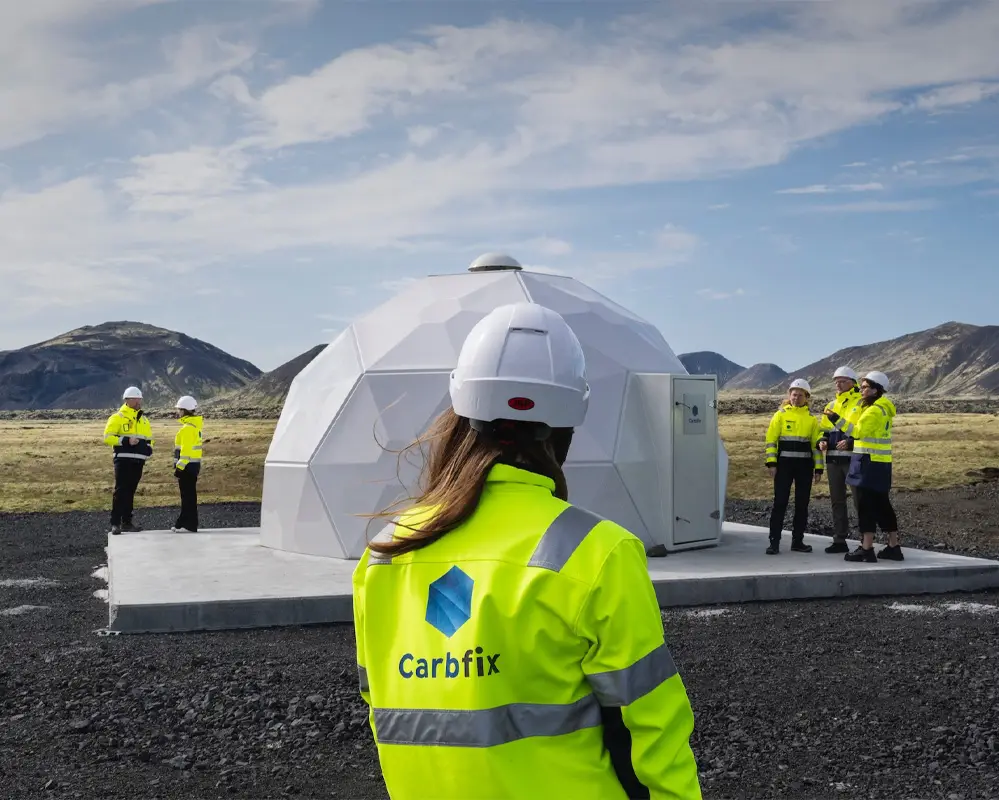
The next question is what to do with the CO2 once it has been collected. That’s where a company called Carbfix comes in, which specialises in storing CO2 underground. CO2 storage is a natural process that happens within the biosphere. Carbfix, along with some others, is looking to replicate this process and, in doing so, provide a viable and permanent approach to CO2 storage.
CO2 is stored via injection into reactive rocks, such as mafic or ultramafic rocks. These types of rock accelerate the natural mineralisation process, turning the CO2 into stone. These stones are then buried deep underground.
It’s wonderful to see companies taking on these challenges and finding creative solutions. They are adapting, and carrying great rum forward into a greener future.