Rum, the word often conjures images of sun-soaked beaches, swashbuckling pirates, and exotic cocktails. Certainly, it’s a spirit steeped in history, rich with flavour, and genuinely diverse. But beyond the fanciful notions, what actually is rum? For instance, how do producers define it, what goes into it, and what do people mean when they mention all those different sugarcane bits and bobs?
If you’ve ever pondered these questions while sipping a Mojito or a Dark ‘n’ Stormy, you’re in the right place. Together, we’ll strip away some mystery, clear up common misconceptions, and give you a solid grasp of this fascinating spirit.
Rum’s Definition: Why There Isn’t One Single Rulebook
First things first: rum’s definition isn’t as strict as, say, Scotch whisky or Tequila. Sure, some overarching agreements exist, but the rules vary from country to country, region to region, and even island to island. Interestingly, this lack of rigid standardisation counts as one of rum’s greatest strengths, since it leads to a rich variety of styles and flavours.
Generally speaking, rum starts life as sugarcane by-products, such as molasses, or fresh sugarcane juice, which producers then ferment and distil. So, that’s the basic, globally accepted understanding. Essentially, the key takeaway here is sugarcane: no sugarcane, no rum. Simple as that, really.
Beyond this, though, things get a little more subtle. Many countries maintain their own specific regulations:
- Minimum alcohol content: Typically, rum must reach at least 37.5% alcohol by volume (ABV) in the EU and 40% ABV in the US, though plenty of bottles sit well above that.
- Ageing: Some regulations demand a minimum ageing period, such as three years in oak for certain Spanish-speaking origins, while others don’t require any at all. This is why unaged “white” rums turn up so frequently, and they’re legitimate.
- Additives: Here’s where things get murky, and it’s a genuinely hot topic in the rum world. Some regions permit added sugar, caramel colouring, or other flavourings after distillation, while others stay far stricter, Rhum Agricole being a prime example. Producers often don’t declare the amount, which fuels debate among devotees. Thankfully, the EU recently tightened its rules, limiting added sugar to 20 grams per litre for products labelled simply as “rum.” Anything above that must now carry a “sweetened rum” or “rum liqueur” label instead, which is a step forward for transparency.
- Base material: As we’ll explore shortly, the specific sugarcane derivative a producer uses matters hugely, and some definitions even specify this directly.
So, while no single, iron-clad global definition exists for rum in the way it does for Cognac, the fundamental truth still holds: if it comes from fermented and distilled sugarcane and meets local ABV requirements, it’s almost certainly rum. Honestly, those variations are part of the charm.

Sugarcane: The Star of the Show
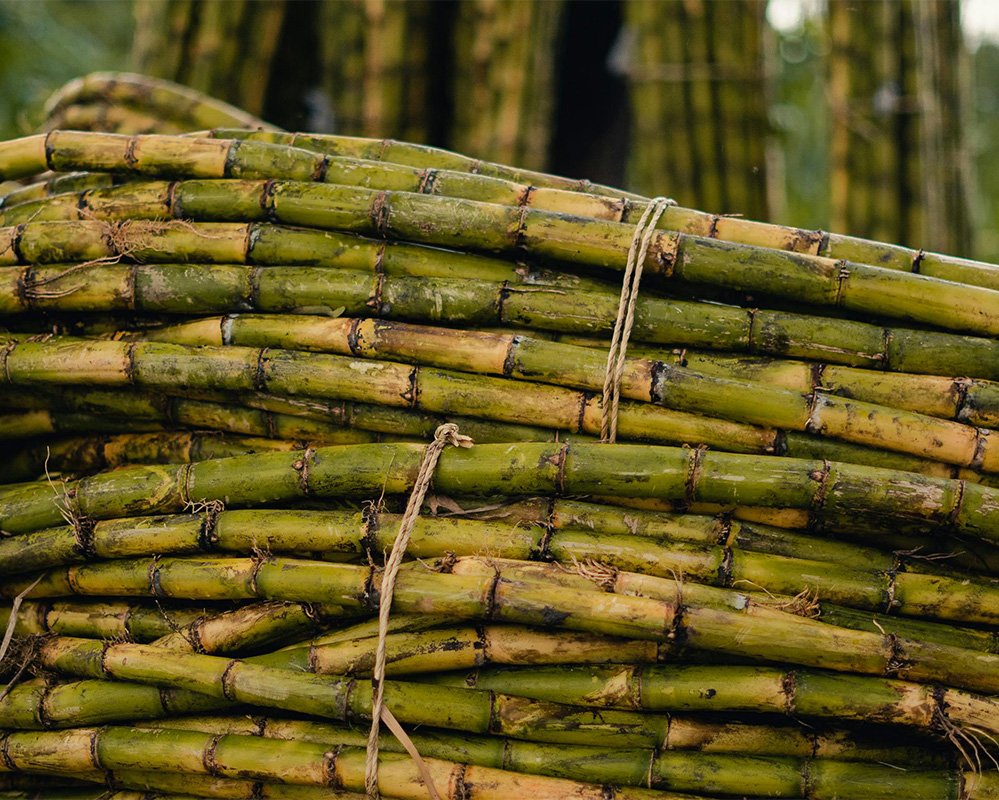
Naturally, you simply can’t talk about rum without talking about sugarcane. Essentially, this tall, grass-like plant, native to tropical and subtropical regions, forms the very heart and soul of the spirit. In fact, Saccharum officinarum, as botanists know it, counts as a genuine marvel, turning sunlight into sugar through photosynthesis and storing that energy in its long, fibrous stalks.
Farmers first domesticated sugarcane in New Guinea thousands of years ago, and it eventually reached India, where ancient civilisations learned to extract its sweet essence. From there, it travelled along trade routes to the Middle East and Europe.
Overall, the plant proves remarkably efficient at producing sugar. Once harvesters bring in the crop, workers crush the stalks to extract the juice, and from this juice, producers create various products that form the different bases for rum. Essentially, understanding these base materials genuinely helps you grasp the sheer variety of rum styles out there.
Molasses: Rum’s Most Common Base
Indeed, molasses is, without a doubt, the most common and historically significant base ingredient for rum globally. So, if you’ve ever baked gingerbread or made treacle tart, you’ll already know what molasses is: a thick, dark, syrupy by-product of the sugar refining process.
Here’s how it works, step by step:
- Crushing: Workers crush sugarcane stalks to extract their sweet juice.
- Boiling: Producers then boil this juice down to concentrate the sugars. As it boils, the water evaporates, and sugar crystals begin to form.
- Centrifuging: Next, they spin the concentrated syrup in a centrifuge to separate the sugar crystals from the liquid, and the remaining liquid becomes molasses. Producers usually repeat this process several times.
- Refining further: The first boil-and-spin yields the highest-quality sugar and a light, sweet molasses, whereas subsequent boils produce darker, less sweet molasses as more sugar leaves the mixture. Eventually, blackstrap molasses emerges from the final boil, the darkest, thickest and least sweet form. It carries plenty of minerals but brings a more robust, almost bitter flavour.
For rum production, distillers typically use industrial-grade molasses, often sourced from the second or third extraction. This still contains a significant amount of fermentable sugar, around 50 to 60%, along with other compounds that contribute flavour.
So why does molasses remain so popular? Honestly, a few reasons stand out. First, availability: since sugar production happens at huge scale worldwide, molasses stays readily available and inexpensive as a by-product, and it’s often easier to transport and store than fresh sugarcane juice. Second, flavour: molasses imparts a rich, often caramelised, weighty character to rum, so it contributes notes of treacle, brown sugar, dried fruit, and spice. Generally, the darker the molasses, the stronger and more flavourful the resulting rum tends to be. Third, fermentation stability: essentially, molasses offers a stable, consistent base for fermentation, giving distillers predictable results.
Ultimately, the vast majority of rums you’ll encounter, from many Caribbean islands to Central and South America, come from molasses. In fact, this includes plenty of Cuban, Puerto Rican, Jamaican, and Guyanese rums.

Sugarcane Juice: The Agricole Approach
While molasses-based rum dominates the market, one important style relies on fresh, raw sugarcane juice as its base instead. This forms the hallmark of Rhum Agricole, produced primarily, though not exclusively, in the French Caribbean islands like Martinique, Guadeloupe, and Marie-Galante.
Here’s the process for sugarcane juice rum:
- Harvesting: First, producers harvest sugarcane ideally early in the morning, when its sugar content peaks.
- Crushing: Next, workers crush the fresh stalks immediately to extract the juice, since speed matters here to prevent oxidation or spoilage.
- Fermentation: Finally, distillers ferment the raw sugarcane juice directly, often with minimal additional treatment.
So, what actually sets sugarcane juice rum apart? Because Rhum Agricole uses fresh juice, it often expresses the sugarcane’s “terroir” more vividly- that unique combination of soil, climate, and growing conditions. Similarly, just as different grapes yield different wines, different sugarcane varieties grown in different soils yield genuinely different flavour profiles. As a result, rums made from fresh sugarcane juice typically display notes of fresh cane, grass, herbs, floral aromas, and sometimes a hint of olive or black pepper. Generally, they taste lighter and brighter than molasses-based rums.
Because sugarcane juice production follows the harvest season, distilleries making Rhum Agricole typically operate only for part of the year, often from early spring to late summer. Meanwhile, logistics play a role too, since fresh sugarcane juice proves far harder to transport and store than molasses. It spoils quickly, so distilleries need to sit close to the cane fields and process the juice immediately after crushing.
Overall, Rhum Agricole represents a smaller, but highly revered, segment of the rum market. Indeed, connoisseurs cherish it for its purity and its unique, vibrant flavour. Though traditionally French Caribbean, other regions, including Brazil (with Cachaça) and parts of Mexico, also produce spirits directly from fresh sugarcane juice.
Sugarcane Honey: The Middle Ground
This third category counts as a hybrid, and while less common than the other two, it’s growing in recognition, notably across Central America (think Guatemala and Nicaragua) and parts of the USA. Producers often call sugarcane honey “miel de caña” in Spanish-speaking regions, and essentially, it means partially reduced sugarcane juice.
Here’s how producers make it:
- Crushing: First, producers crush sugarcane to extract its fresh juice, much as they would for Rhum Agricole.
- Partial evaporation: Then, instead of fermenting straight away, producers gently heat and boil down the juice, evaporating some water and concentrating the sugars without extracting sugar crystals. Eventually, it becomes a thick, syrupy liquid, essentially a highly concentrated sugarcane juice.
So, what does sugarcane honey bring to the final rum? Flavour-wise, it often sits somewhere between molasses-based and sugarcane juice-based rums. It can carry some of the fresh, grassy notes you’d find in Agricole, yet usually with more body, sweetness, and caramelised intensity than pure juice rums, while still landing lighter than molasses-based rums overall. On top of that, sugarcane honey offers a real practical advantage. Since reducing the water content makes it far more shelf-stable, distilleries can store and transport it much more easily than fresh juice, allowing year-round production even without a cane field next door. Plus, its concentrated sugar content makes for a genuinely efficient fermentation process.
While not as widely known as the other two bases, sugarcane honey continues gaining popularity as distillers explore different paths toward flavour and production efficiency. Frankly, it delivers a unique character that can prove incredibly appealing.
Terroir, Colonial Styles and What Shapes Rum’s Character
However, while the choice of sugarcane derivative sets a fundamental flavour profile, it’s just one piece of the puzzle. Much like wine, rum can express a genuine sense of terroir. So, several factors play into this:
- Sugarcane variety: Naturally, thousands of species and cultivars exist, each carrying varied sugar content and flavour compounds.
- Soil type: Volcanic soil, sandy soil, clay; all of it influences the sugarcane’s growth and flavour.
- Climate: Rainfall, sunshine, humidity, and temperature shifts throughout the growing season all leave their mark.
- Harvesting methods: Manual versus mechanical harvesting, and burning fields versus not, can affect the quality of the cane too.
Together, much like barley in whisky or grapes in wine, all these elements contribute to the complexity and diversity you find in the glass.
Moreover, while we’ve focused mainly on ingredients so far, rum often gets categorised by its colonial heritage too, which genuinely impacts its character.
Rum’s history is closely tied to colonialism. Back then, Spanish, French, and British colonisers controlled most of the early rum trade. You can still spot their influence today in how the word “rum” is spelt around the world: ron, rhum, and rum.
These three empires didn’t just influence the name, though. They also shaped how each colony made rum, since each empire had its own preferences and resources. Because of this, people often split rum into three styles: French, English, and Spanish.
We don’t like to use these labels here. They come from the past; they’re vague, limiting, and oversimplified. For one thing, they don’t tell you much about how the rum was actually made, like whether it came from molasses or fresh cane juice, or whether it was pot-distilled or column-distilled, or blended. Another issue, in our opinion, is that this system doesn’t give proper credit to the people who actually made the rum.
However, we will explain these styles below for historical context.
- Spanish style: Often lighter-bodied and column-distilled, typically made from molasses (think Cuba, Puerto Rico, and the Dominican Republic). Generally, these tend to feel softer and more approachable.
- English style: Meanwhile, often heavier-bodied and pot-distilled, carrying more character and funkiness (think Jamaica, Barbados, and Guyana). Again, most are molasses-based too.
- French style: Finally, primarily Rhum Agricole, made from fresh sugarcane juice and known for its grassy, vegetal notes (think Martinique and Guadeloupe).
We’ll dig deeper into these lineages in a later article, but for now, it’s worth grasping that the base ingredient frequently dictates the traditional style a rum aims for, even before it reaches the still.
Caramel Colouring and Additives: A Contested Topic
Before wrapping up this basic guide, it’s worth touching on a genuinely sensitive subject in the rum world: additives. Unlike many other spirit categories with strict regulations around what producers can add post-distillation (Scotch and Bourbon, for instance, allow only water and barrel char), rum has historically felt a bit like the wild west.
Generally, many producers add caramel colouring (E150a) to achieve a consistent or darker appearance, a practice that’s largely harmless from a flavour perspective and common across the wider spirits world. However, adding sugar and other flavourings sparks genuine controversy. Some argue it’s traditional and helps balance the spirit, while others see it as a way of masking poor distillation or cheapening the final product.
As mentioned earlier, the EU continues pushing for greater transparency, and the 20g/L sugar limit for “rum” classification marks an important step forward. Hopefully, this progression toward honest labelling continues, giving consumers the information they need to make informed choices. In the meantime, if you’re curious about a particular rum, independent outlets like Fat Rum Pirate, along with various industry groups, test rums for sugar content and offer genuinely valuable insight.
Final Thoughts: A Spirit Worth Exploring
So, there you have it. At its core, rum comes from sugarcane, yet the journey from plant to bottle varies enormously, largely shaped by which part of the cane’s sugary goodness the producer chooses to use.
Whether it’s the rich, treacly notes of a molasses-based rum, the bright, grassy character of a Rhum Agricole made from fresh juice, or the intriguing middle ground offered by sugarcane honey, each style delivers a genuinely distinct experience. Ultimately, this variety is exactly what makes rum such an absorbing spirit, offering something for every palate and occasion.
Next time you pour a glass, take a moment to consider its origin story. For instance, did it come from a strong molasses rum crafted at a classic English-style distillery? Or perhaps, instead, you’re holding a zesty Rhum Agricole, expressing the real essence of the cane field? Either way, knowing these basics will not only heighten your appreciation but also open up a whole new world of exploration within the compelling realm of rum. Cheers!