You might come across certain words like Funk, Hogo and Navy Strength when exploring the world of Rum. Here’s a list of common words and what they actually mean.
A
Agricole — Rum distilled directly from fresh-pressed sugarcane juice rather than molasses, most famously produced in Martinique and Guadeloupe. It carries bright, grassy, vegetal notes that set it apart from molasses-based rum.
Angel’s Share — The portion of rum lost to natural evaporation during barrel ageing. Tropical climates lose considerably more to evaporation each year than cooler ones, sometimes as much as 6-10%.
Añejo — Spanish for “aged.” Used across Spanish-speaking rum-producing countries to indicate a rum has spent time maturing in oak barrels.
AOC (Appellation d’Origine Contrôlée) — A French designation, applied to Martinique rhum agricole, guaranteeing the spirit was produced according to strict regional and quality standards, similar to wine appellations.
ABV (Alcohol By Volume) — The percentage of pure alcohol in a spirit. Standard rum typically sits between 37.5% and 40% ABV, while overproof rums can reach 60% or higher.
B
Bagasse — The dry, fibrous pulp left behind after sugarcane stalks are crushed to extract their juice. Many distilleries burn bagasse as fuel to power their operations.
Blackstrap Molasses — The darkest, thickest, and least sweet form of molasses, produced from the final boil of the sugar refining process. It’s rich in minerals but carries a more robust, almost bitter flavour.
Blending — The art of combining rums from different casks, ages, or even distilleries to achieve a consistent or more complex final flavour profile.
C
Cachaça — Brazil’s national spirit, distilled from fresh sugarcane juice rather than molasses. Often described as “rum’s older sibling,” it’s a protected name that must be produced in Brazil.
Cask Strength — Rum bottled directly from the barrel without dilution, resulting in a considerably higher ABV than standard bottlings.
Chill Filtration — A process where rum gets cooled and passed through a fine filter to remove fatty acids and esters that could otherwise cause cloudiness. It produces a clearer spirit but can strip out some flavour and texture.
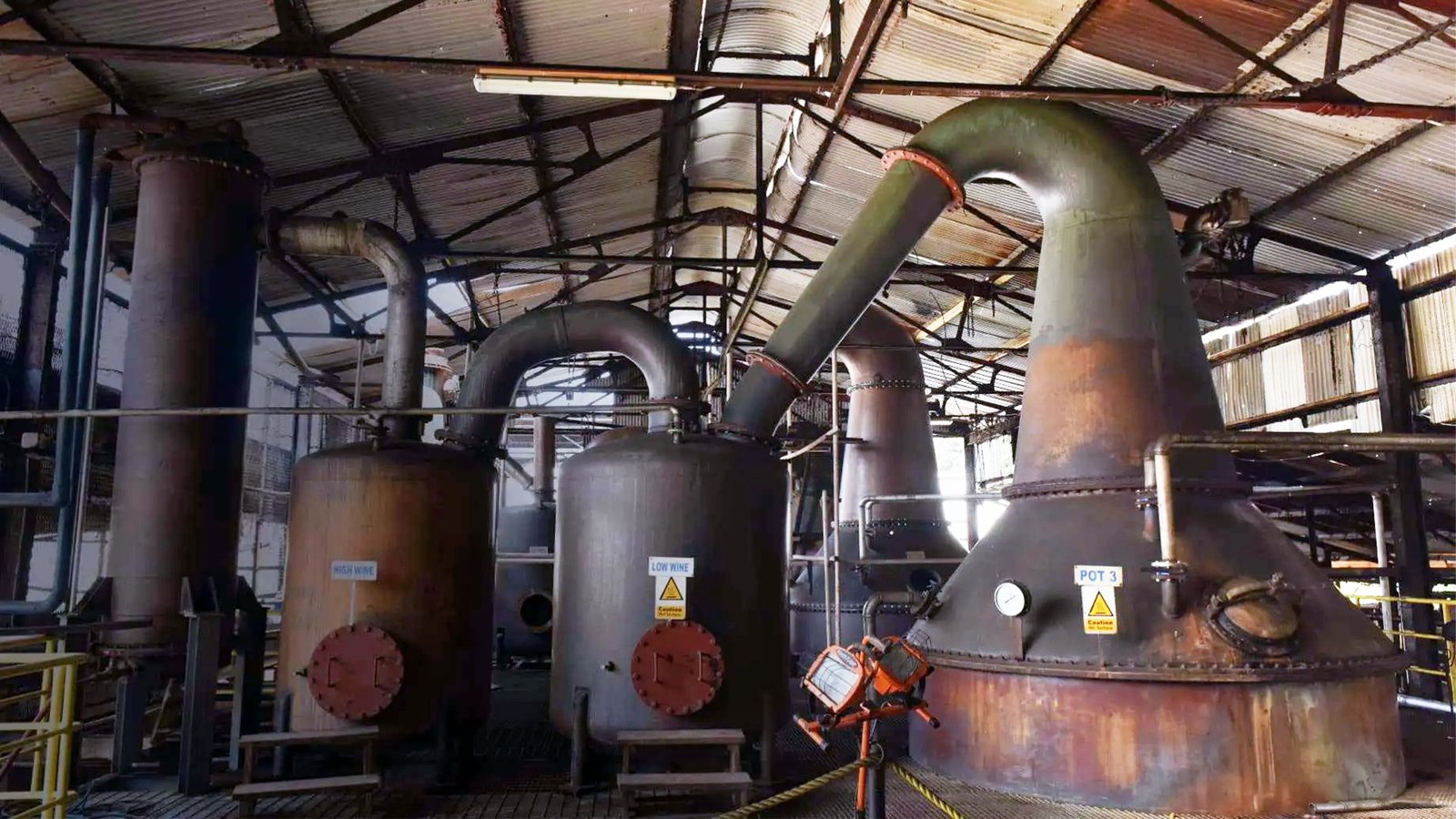
Coffey Still — A type of column still, named after inventor Aeneas Coffey, capable of continuous distillation. It produces a lighter, more refined spirit than traditional pot stills.
Column Still — Also called a continuous still, this tall, multi-chambered still allows for efficient, ongoing distillation, typically producing cleaner, higher-proof spirit than a pot still.
Congeners — Chemical compounds, including esters, tannins, and other by-products of fermentation and distillation, that contribute flavour, aroma, and colour to rum. Higher congener levels generally mean more intense flavour.
Cuba Libre — A classic cocktail combining white rum, cola, and a squeeze of lime, sometimes called simply “rum and coke.”
D
Demerara — Rum produced in Guyana, named after the Demerara River. Known for its deep, oily, and robust character, often distilled using historic wooden stills.
Distiller’s Yeast — A carefully selected or cultured yeast strain used to ferment sugarcane juice or molasses into alcohol. Different yeast strains produce noticeably different flavour profiles.
Dunder — A highly acidic, nutrient-dense leftover liquid from previous distillations, stored in outdoor pits and reintroduced during fermentation. Common in Jamaican rum production, dunder intensifies ester production and boosts funk.
E
Ester — An aromatic compound created during fermentation when organic acids bind with alcohol. High ester counts are responsible for the funky, fruity intensity found in styles like Jamaican rum.
Estufagem — A Portuguese term (more commonly associated with Madeira wine) sometimes referenced in tropical rum ageing discussions to describe heat-accelerated maturation.
F
Fermentation — The process where yeast converts the sugars in molasses or cane juice into alcohol, typically taking anywhere from a day to several weeks depending on the desired flavour intensity.
Funk — A slang term, closely related to “hogo,” describing the intense, fruity, sometimes rubbery or medicinal aroma found in high-ester Jamaican rums.
G
GI (Geographical Indication) — A legal designation protecting the name and production standards of a spirit tied to a specific region, such as “Barbados Rum” or “Jamaica Rum.”
Gold Rum — Rum that gets its amber colour either through genuine barrel ageing or the addition of caramel colouring, sitting stylistically between white and dark rum.
Grand Arôme — An intensely high-ester style of rum, particularly associated with Réunion Island, prized for its powerful, fruity aromatic character.
H
Heads and Tails — The first and last portions of liquid to emerge during distillation, both generally considered undesirable and separated out from the “hearts,” the good-quality middle portion that gets kept for maturation.
Hearts — The desirable central portion of a distillation run, collected for barrel ageing after the heads and tails have been removed.
Hogo — An older term, derived from the French “haut goût” (meaning “high” or “gamey” flavour), used historically to describe the funky, intense character of traditional Jamaican rum.
Hogshead — A type of oak cask, traditionally holding around 250 litres, commonly used for rum maturation, often repurposed from the whisky or bourbon industry.
L
Libation — A small pour of rum offered or poured onto the ground as a mark of respect, common in Caribbean and West African-influenced traditions, often performed before opening a new bottle.
M
Marque — A specific style or “brand mark” of rum historically associated with a single sugar estate or still, distinguished by its own particular flavour profile.
Molasses — A thick, dark, syrupy by-product of sugar refining, and the most common base ingredient for rum production worldwide.
Muck — Similar to dunder, a fermented, bacteria-rich pit material sometimes used in Jamaican rum production to intensify ester development.
N
Navy Strength — Rum bottled at 57% ABV or higher, referencing the historically high-proof rum once issued to sailors in the British Royal Navy.
Noble Cane — An older, heritage variety of sugarcane, valued for its distinct flavour and used by some premium producers, including in the Philippines.
O
Overproof — Rum bottled well above standard strength, typically 57% ABV or higher, sometimes reaching 75% or more.
P
Pot Still — A traditional, batch-based still that produces a heavier, more flavourful spirit than a column still, retaining more of the original congeners and character.
Proof — A historic measurement of alcohol strength. In the US, proof equals double the ABV percentage (so 80 proof means 40% ABV); older British proof measurements worked differently.
R
Raspadura — A solid, dried block of unrefined cane sugar, sometimes used as a base ingredient in traditional Central American rum production.
Retort — A secondary chamber attached to a pot still, used to redistil vapours and increase alcohol strength and complexity without needing a full second distillation run.
Rhum — The French spelling of rum, generally associated with French Caribbean territories such as Martinique and Guadeloupe.
Ron — The Spanish word for rum, used across Spanish-speaking rum-producing nations like Cuba, Puerto Rico, and Venezuela.
S
Single Cask — A rum bottled entirely from one individual barrel, rather than blended with rum from other casks, prized by collectors for its unique, unrepeatable character.
Sistema Solera — A fractional blending method, borrowed from Spanish sherry production, where rum moves progressively through tiers of casks, with older tiers continually topped up from younger ones.
Sugar Cane Honey (Virgin Cane Syrup) — A concentrated syrup made by gently reducing fresh sugarcane juice, used as a base ingredient by certain premium rum producers instead of molasses.
T
Tannins — Compounds absorbed from oak barrels during ageing that contribute dryness, structure, and subtle bitterness to matured rum.
Terroir — A term borrowed from wine, describing how soil, climate, and growing conditions shape the character of the sugarcane, and therefore the final rum.
Tropical Ageing — Maturing rum in a hot, humid climate, which speeds up the interaction between spirit and barrel considerably compared with cooler regions, though it also increases the angel’s share.
V
VAT — Historically used in rum branding (such as Fernandes VAT 19) to refer to a specific blend held in a particular ageing vat.
W
Wash — The fermented liquid, essentially a rough alcoholic “beer” made from molasses or cane juice, that gets fed into the still to begin distillation.
White Rum — Clear rum, either unaged or aged briefly then charcoal-filtered to remove colour. Also known as silver, clear, or light rum.
X
XO (Extra Old) — A term used to indicate a particularly well-aged, premium blend, though the specific minimum age requirement varies by producer and region.